
There is a version of this conversation that happens all the time in Greenwich. It happens on the sidelines, over a second glass of wine, in a whisper at the end of a walk around Binney Park. Someone admits that sex hurts now, or that she cannot remember the last time she wanted it, or that she stopped doing jumping jacks at Barre. And everyone nods, because everyone has a version of it.
What almost never happens is that same conversation, out loud, with a doctor who has answers. So for every woman in Greenwich quietly wondering about dryness, painful sex, low libido or leaking — through breastfeeding, perimenopause, menopause or beyond — we brought one in.
Getting older should not mean giving up comfortable, enjoyable sex.
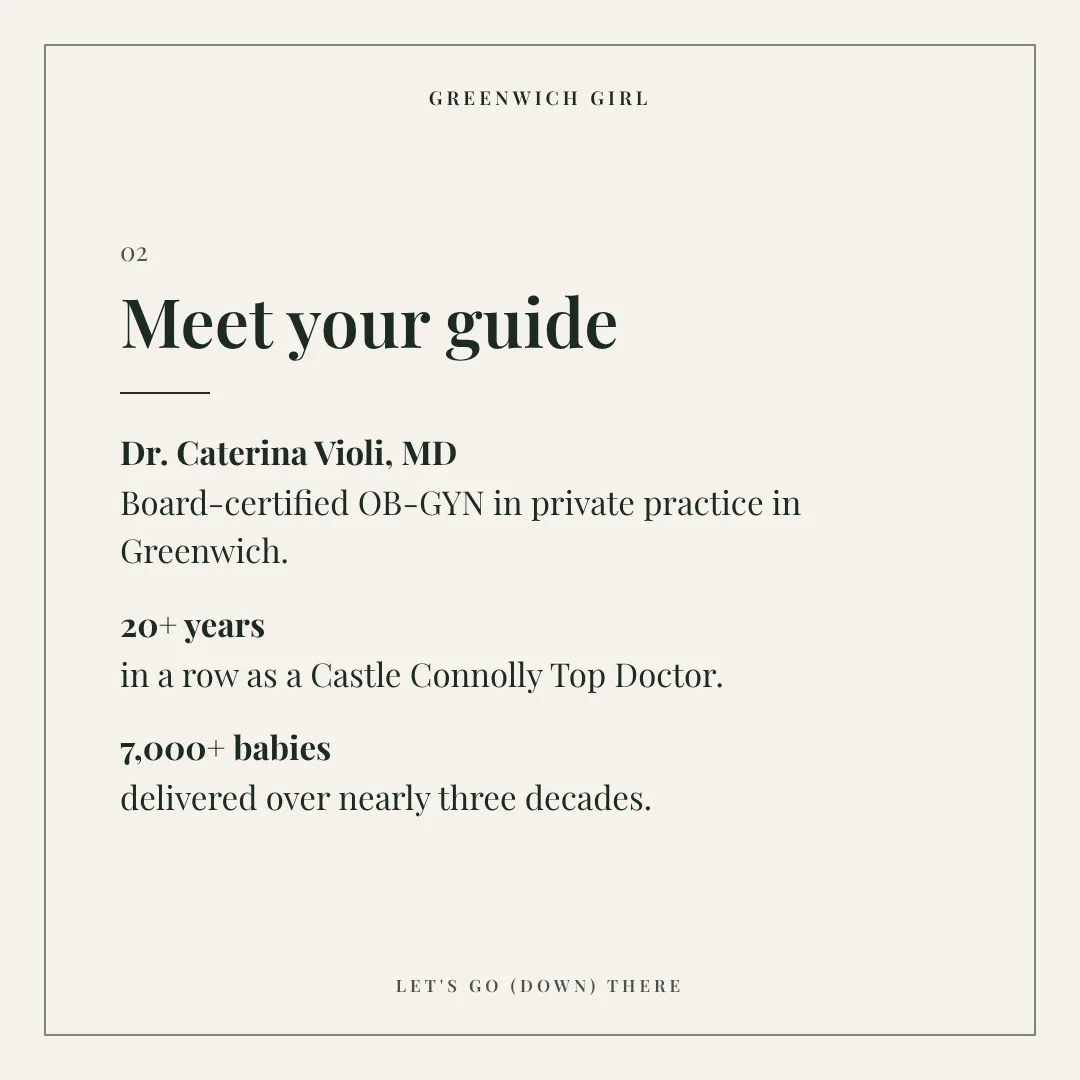
Dr. Caterina Violi is a board-certified OB-GYN in private practice in Greenwich. She has been named a Castle Connolly Top Doctor for more than 20 consecutive years running, and in nearly three decades of practice she has delivered more than 7,000 babies — which means a good portion of this town met her on the very first day of their lives.
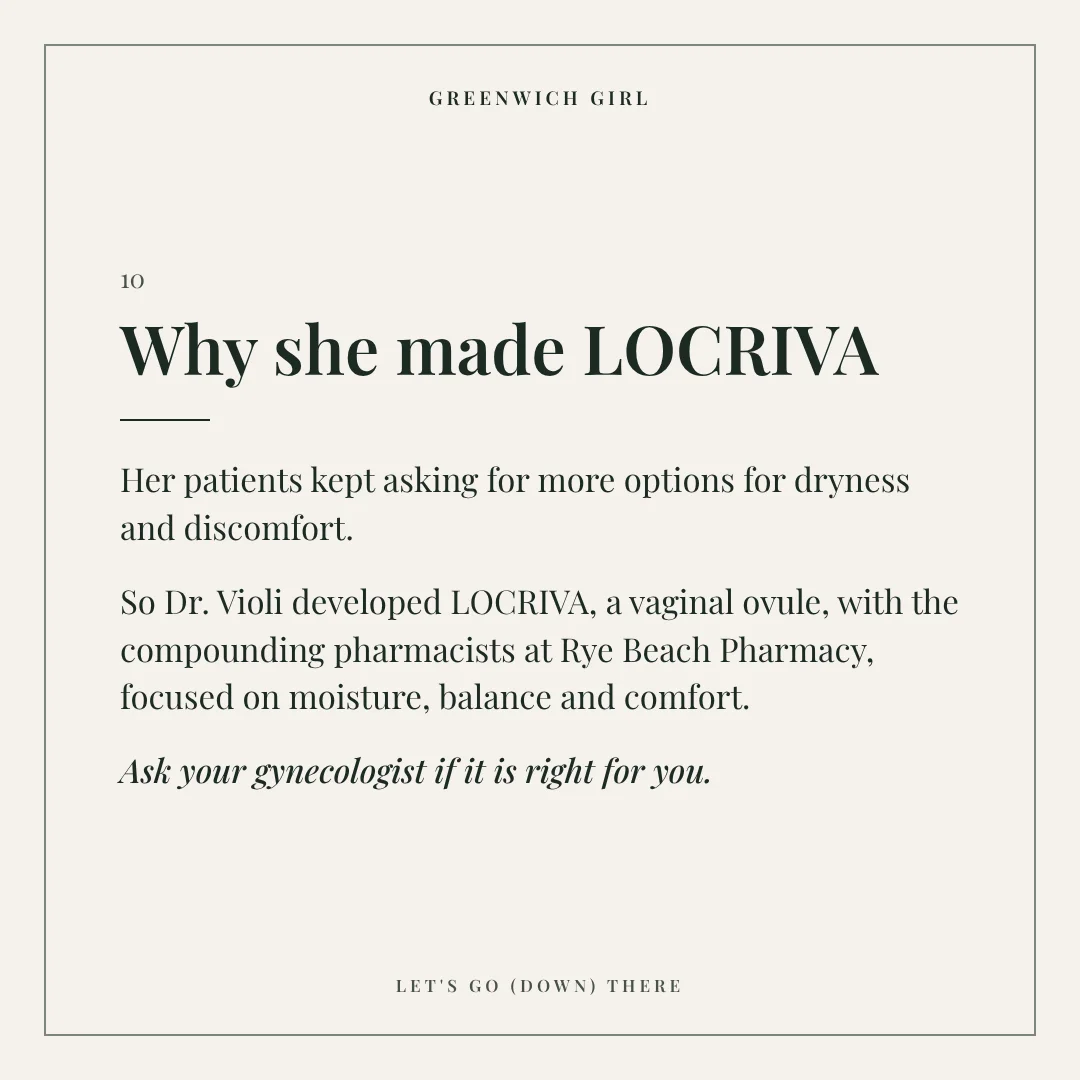
She has cared for women from adolescence through pregnancy, menopause and beyond, with a special interest in perimenopause, menopause and vaginal health. And she is the kind of doctor who listens so closely that when her patients kept describing a need nothing on the shelf was meeting, she developed a solution herself: LOCRIVA, a vaginal ovule created with the compounding pharmacists at Rye Beach Pharmacy.
Her guiding belief is refreshingly simple. Women should feel comfortable talking about every part of their health and confident that someone is truly listening. Every patient should leave feeling understood, informed and empowered. Here is Dr. Violi, in her own words.
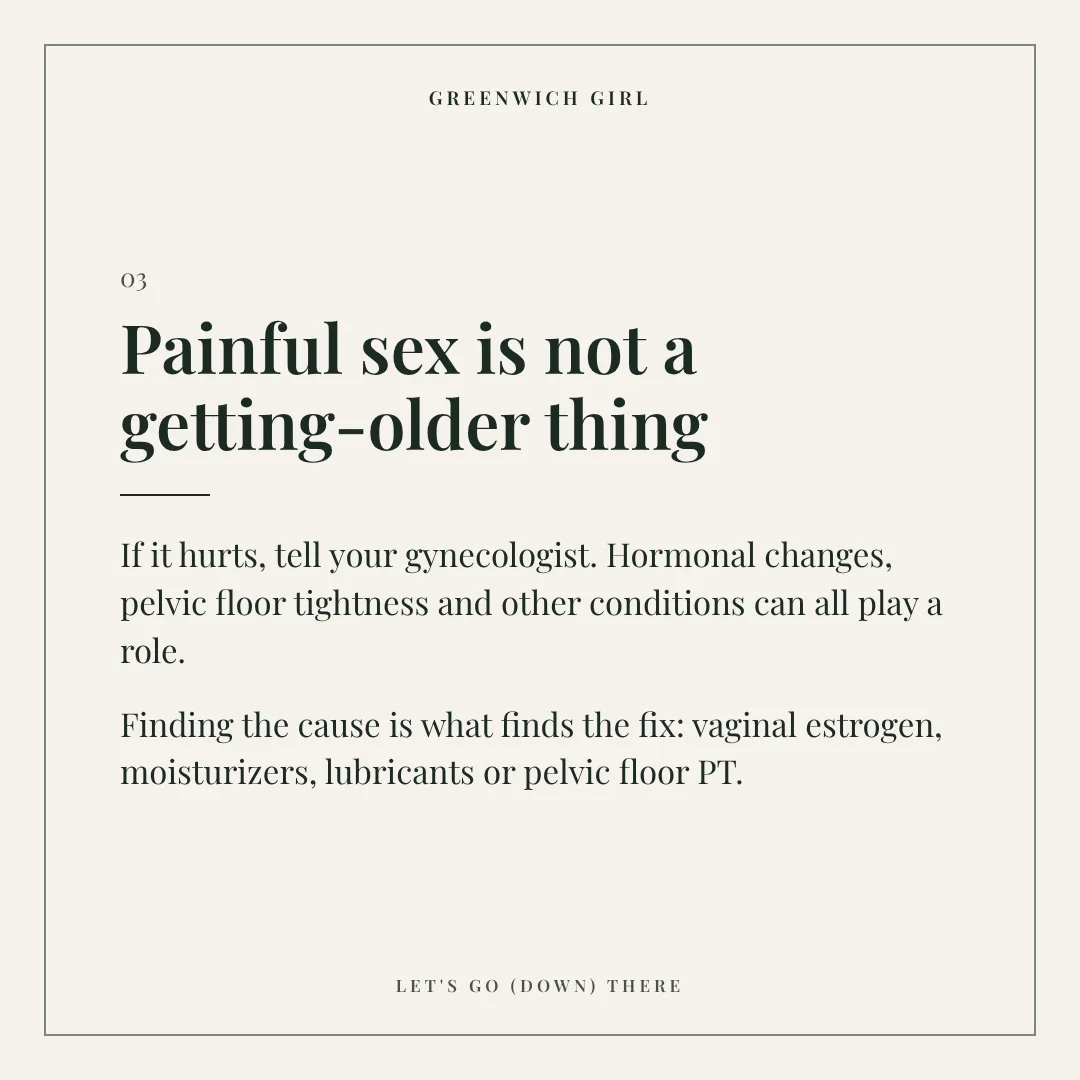
On painful sex and a disappearing libido: "Getting older should not mean giving up comfortable, enjoyable sex. If sex hurts, please bring it up with your gynecologist. Hormonal changes, pelvic floor tightness, and other conditions can all play a role, and understanding the cause helps us find the right treatment. That might mean vaginal estrogen, moisturizers, lubricants, or pelvic floor physical therapy."
Desire, she says, deserves its own separate conversation. Pain, poor sleep, stress, medications and relationship concerns can all affect libido. "You should feel comfortable talking about it, because there are ways to help."
On dryness down there: Dryness is not only about age, Dr. Violi explains. It can happen at many stages of life, including breastfeeding, perimenopause and menopause, and stress and exhaustion can make intimacy feel harder too, so it is worth looking at the whole picture.
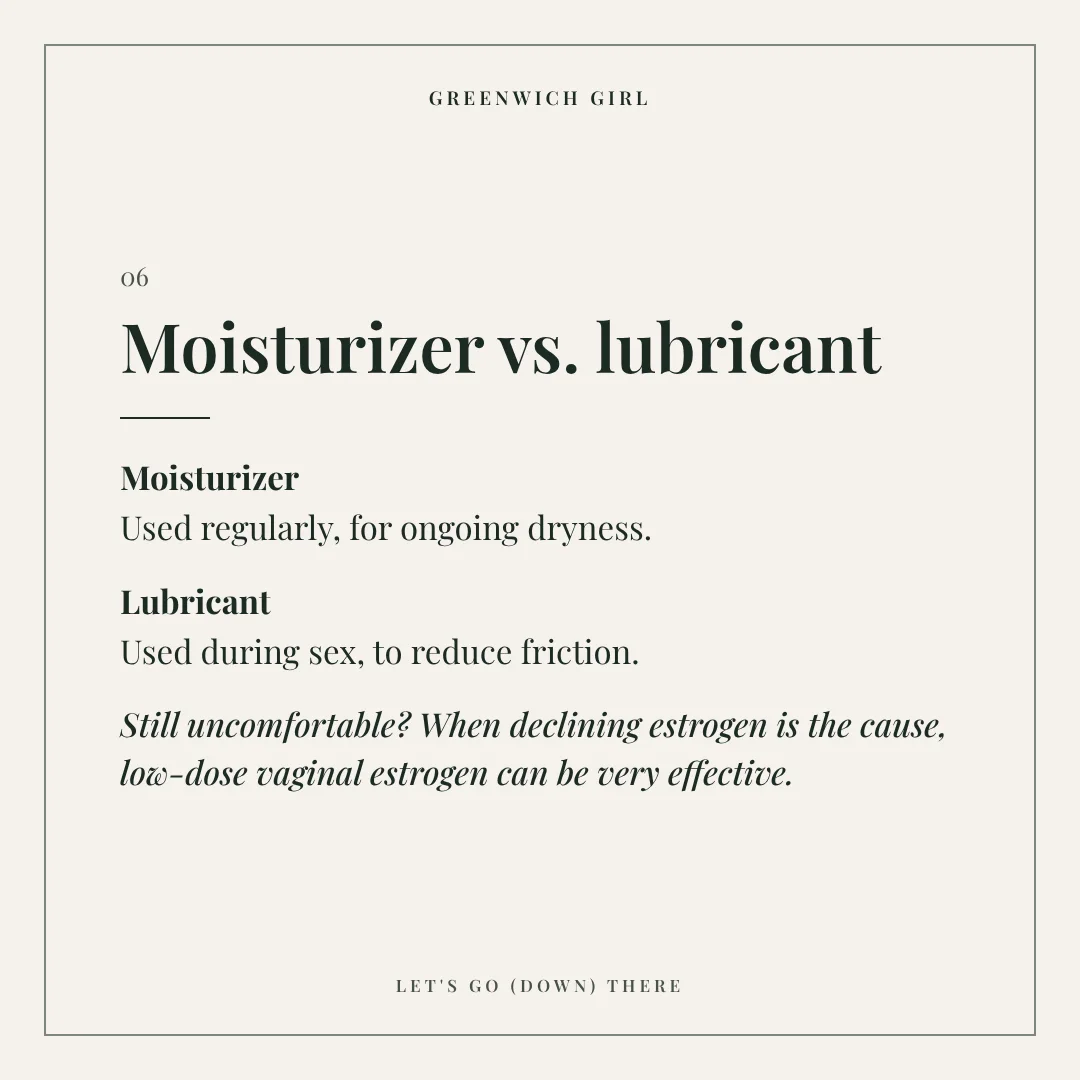
"I explain the difference this way: a vaginal moisturizer is used regularly for ongoing dryness, while a lubricant helps reduce friction during sex. If you are still uncomfortable, let your gynecologist know. When declining estrogen is the cause, low-dose vaginal estrogen can be very effective. You do not have to wait until the discomfort affects your relationship or daily life to ask for help."
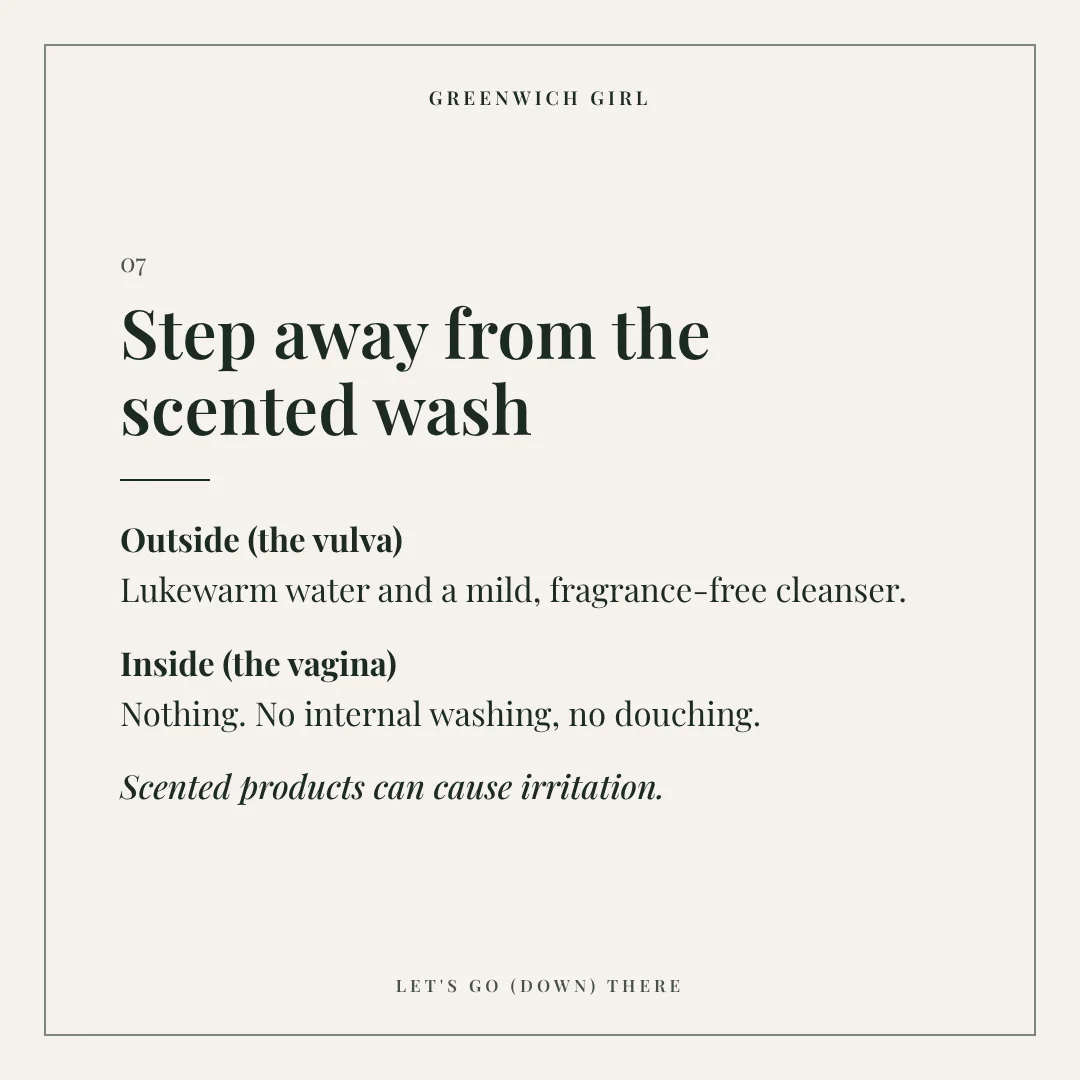
On vulva serums, intimate washes and skincare: "My advice is to keep it simple. The vulva, the outside genital area, usually needs only gentle washing with lukewarm water and a mild, fragrance-free cleanser. The vagina does not need internal washing or douching, and scented products can cause irritation."
The products she would put her name behind have a clear purpose, which is exactly why she developed LOCRIVA. Her patients kept asking for more options for dryness and discomfort, so she and the pharmacists at Rye Beach Pharmacy focused on moisture, balance and comfort. If that sounds like you, she suggests asking your gynecologist whether it is a good option for you.
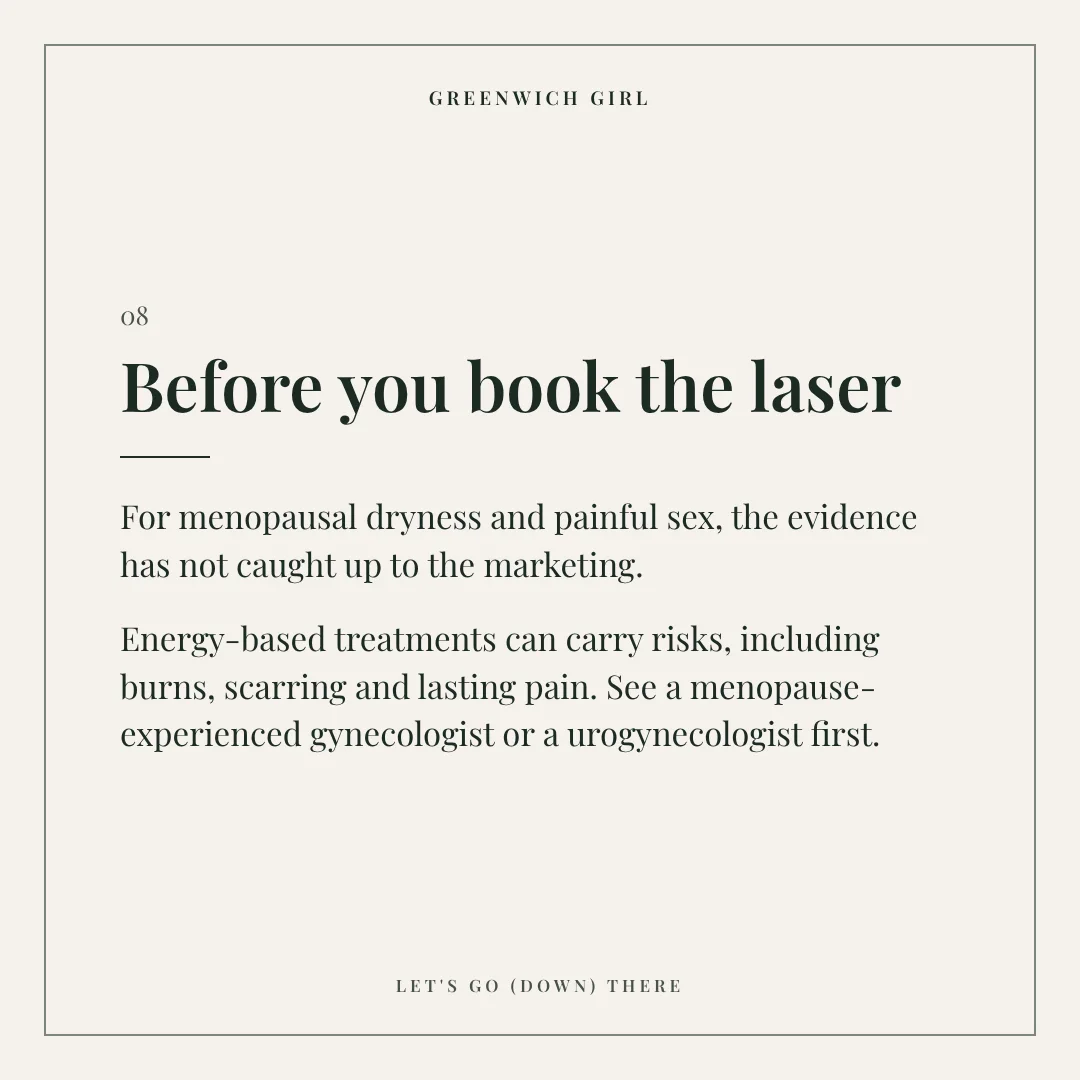
On vaginal rejuvenation and laser treatments: Dr. Violi understands the appeal, especially for a woman who has been uncomfortable for a long time. But for menopausal dryness and painful sex, she says, the evidence has not kept pace with the marketing. Laser and other energy-based treatments can carry risks, including burns, scarring and lasting pain.
"Before spending money on a procedure, talk with a gynecologist experienced in menopause care or a urogynecologist. I want women to understand what has been studied, what remains uncertain, and which established treatments may help them."
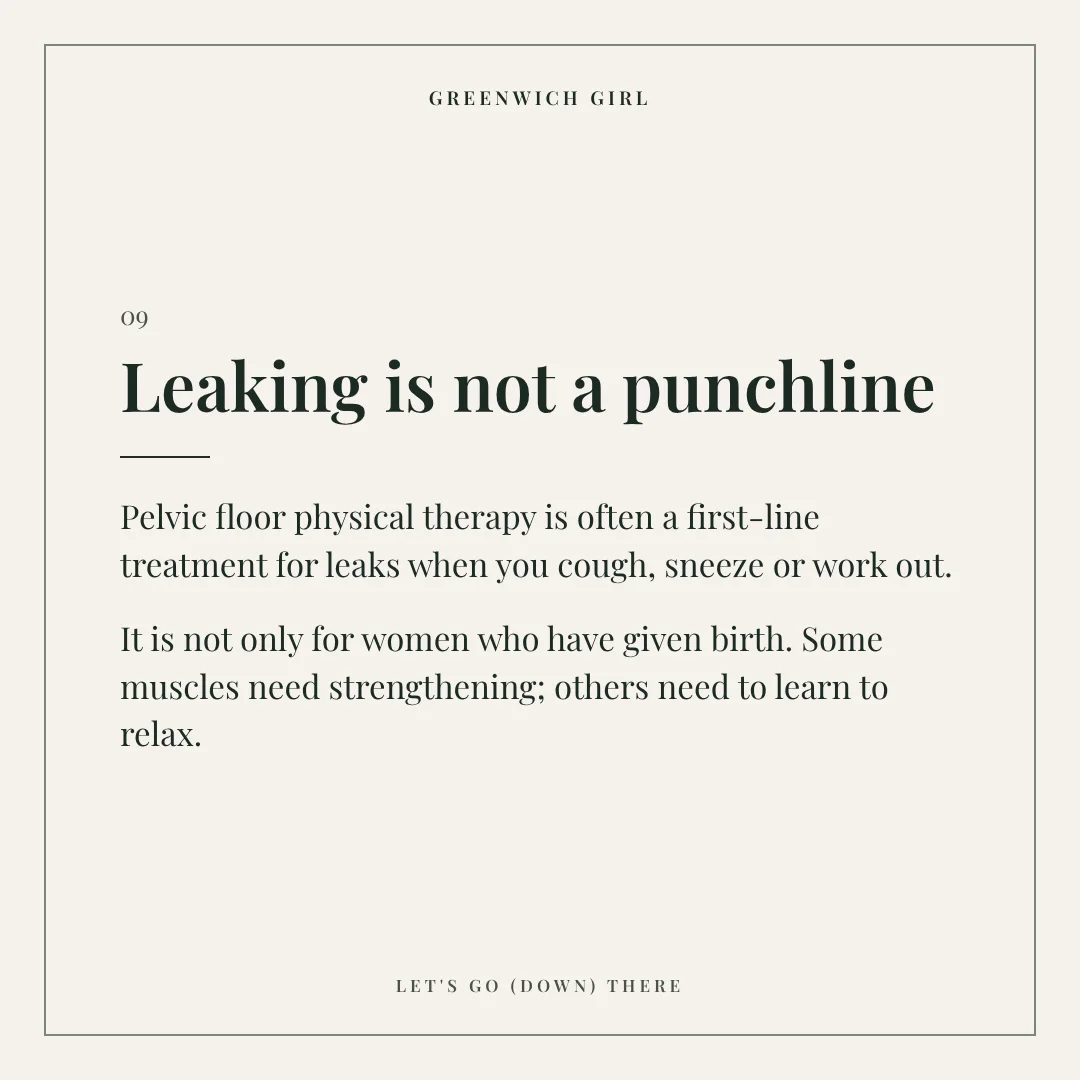
On leaking and pelvic floor physical therapy: "We joke about leaking when we laugh or sneeze so often that women start to think they just have to live with it. I want women to know help is available."
Pelvic floor physical therapy is often a first-line treatment for leakage with coughing, sneezing or exercise, and it can also help with certain causes of painful sex and pelvic discomfort. It is not just for women who have given birth. Treatment is tailored to what your muscles actually need: some need strengthening, while others need help relaxing and coordinating.
"I wish we talked about pelvic floor therapy as comfortably as we talk about physical therapy for a back or knee problem."
If there is one thread running through every answer, it is this: you do not have to just live with it. Not the pain, not the dryness, not the leaking, and not the silence. Bring it up at your next appointment, or make an appointment just to bring it up. And if you need a doctor who will actually listen, Greenwich happens to have one of the very best.
This article is for informational purposes only and is not a substitute for medical advice. Please consult your own healthcare provider about your individual situation.


Featured Practice
Dr. Catarina Violi
2 Deerfield Drive Greenwich 06830